More house, without moving out of your neighborhood.
Sometimes the answer isn't a separate unit — it's more of the house you already love. A room addition, a bump-out, or a second story gives you the space a growing family or an aging parent needs, while you stay on the lot and in the school district you chose.
Is this you?
You don’t want a rental unit — you want more living space. The house is too small for the family it now holds, or a parent is moving in and you’d rather expand the main home than build a cottage. Moving means leaving the neighborhood and eating today’s rates and prices. An addition keeps you where you are and grows the house around your life.
This format fits if you want to:
- Add a bedroom, family room, or primary suite to the main house.
- Build an accessible, single-story suite for a parent aging in place.
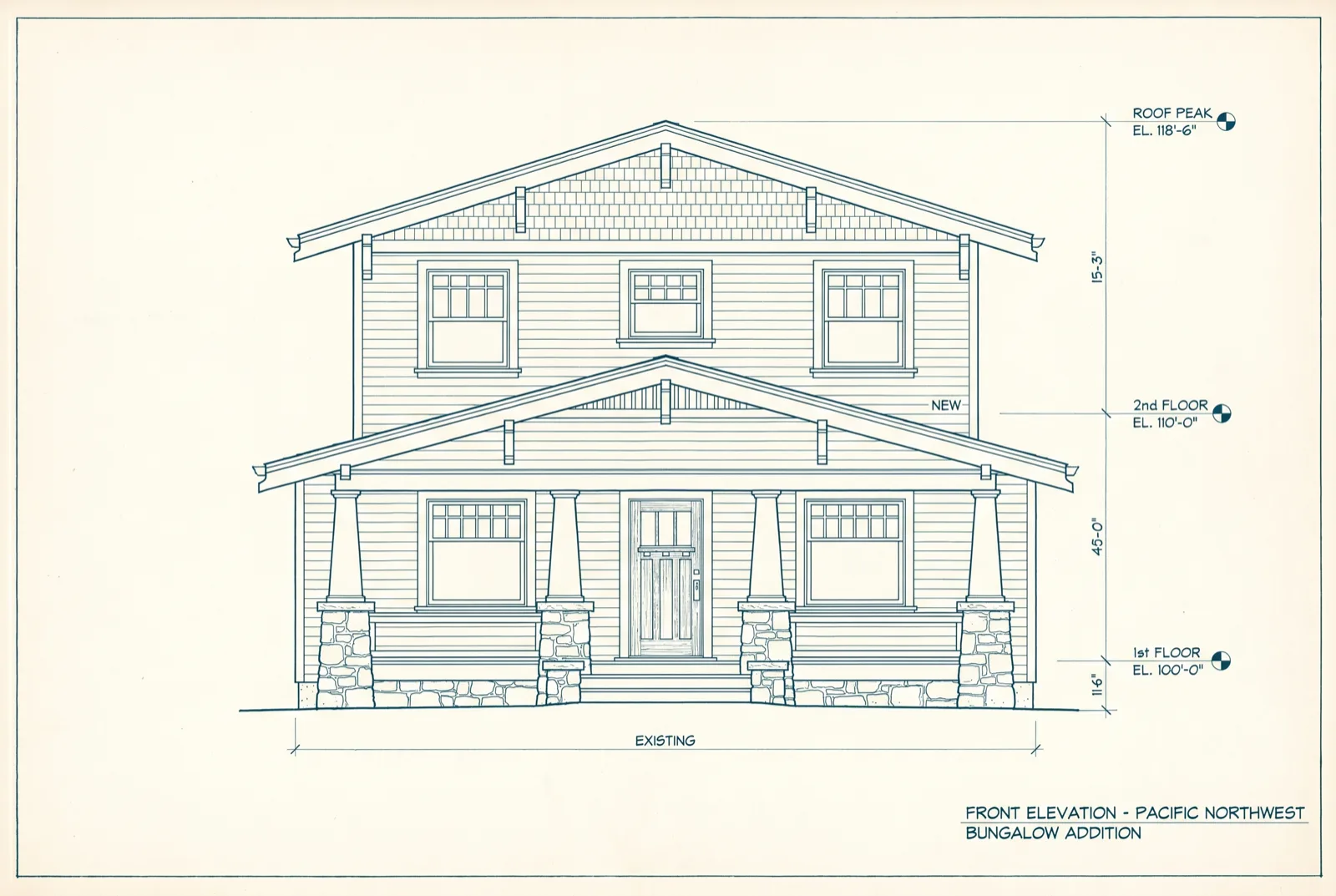
- Go up — a second-story addition — when the lot has no room to go out.
What’s included — and what’s not
| Included | Not included |
|---|---|
| Design + structural engineering for the addition | The land — you already own it |
| Foundation / structural tie-in, framing, roof | Major utility upgrades beyond a standard connection |
| Insulation, drywall, HVAC extension to current code | Unrelated remodeling of the existing house (priced separately) |
| Roof / siding match to the existing house | Unusual foundation work on extreme slopes or fill |
| Permit package + inspections | Furniture, appliances above standard, extra landscaping |
Published price range
All-in covers the addition itself — design, structure, finishes, permits — not the land and not renovating the rest of the house. Second-story additions cost more per square foot because of the structural tie-in to the existing home. Standard finish, 2025–26 King County ranges.
| Type / size | Vertical build | All-in (standard) |
|---|---|---|
| Room addition / bump-out, 400 sf | ~$90K–$140K | $130K–$195K |
| Room or suite addition, 500 sf | ~$115K–$175K | $160K–$240K |
| Larger / second-story addition, 700 sf | ~$160K–$240K | $225K–$335K |
This is a planning range from real project data, not a bid. Your number depends on site conditions, finish level, and design. We confirm an exact, fixed-scope price on a real quote.
How it works
- Feasibility — setbacks, lot coverage, height, and how the addition ties into the existing structure.
- Design + engineering — sized to your lot and matched to the existing house.
- Permit package + submittal to SDCI or your city / King County DPER.
- Permit review + corrections — typically a few months.
- Build, inspections, and tie-in to the existing home.
City notes
Additions aren’t ADUs, so they don’t use the pre-approved or two-per-lot ADU rules — but the same envelope limits apply: setbacks, lot coverage, and height set what you can build. In Seattle, additions permit through SDCI; in unincorporated King County, through DPER. A steep slope or critical-area overlay can require a geotech report and shrink the buildable area, which is why we run feasibility first. If you’re weighing an addition against a separate unit, an attached ADU or DADU may pencil better when rental income is the goal — we’ll show you both.
If you want more living space for your own family or a parent, an addition keeps it all under one roof. If you want rental income or a fully independent unit, an attached ADU or a detached DADU usually pencils better. We'll show you the cost and trade-offs of both for your lot.