Work like a professional, without the house bleeding in
Remote work made your home office untenable, but a full DADU feels like overkill for a workspace. Here's the honest line between a backyard office and a full ADU — what each costs, what each permits, and the upgrade path between them.
Seattle has a lot of remote and hybrid tech workers, and they tend to land in the same spot: “I need to work like a professional without my household bleeding into my career”— but they can't justify a full DADU's cost for what they call a “glorified shed.” One r/Seattle homeowner described their setup as “1st floor office and guest bed; 2nd floor kitchen, dining, living.”The real question isn't whether to build — it's how much building you actually need.
The situation
Working from the kitchen table or a converted bedroom stops working once the job is permanent. You want a real door to close, quiet, and a clean line between home and work. But spending $250K–$700K on a full DADU to get a desk feels absurd. The good news: you have a cheaper option, and the choice comes down to one question — do you ever want this building to be more than an office?
Backyard office vs. full DADU
| Backyard office / studio | Full detached DADU | |
|---|---|---|
| Typical cost (Seattle) | Under ~$150K | $250K–$700K+ |
| Kitchen | No (that's the point) | Yes |
| Permit path | Accessory structure (simpler) | Dwelling unit (heavier, utility connections) |
| Can be rented as housing | No | Yes |
| Future flexibility | Office / studio only | Office now, rental or family unit later |
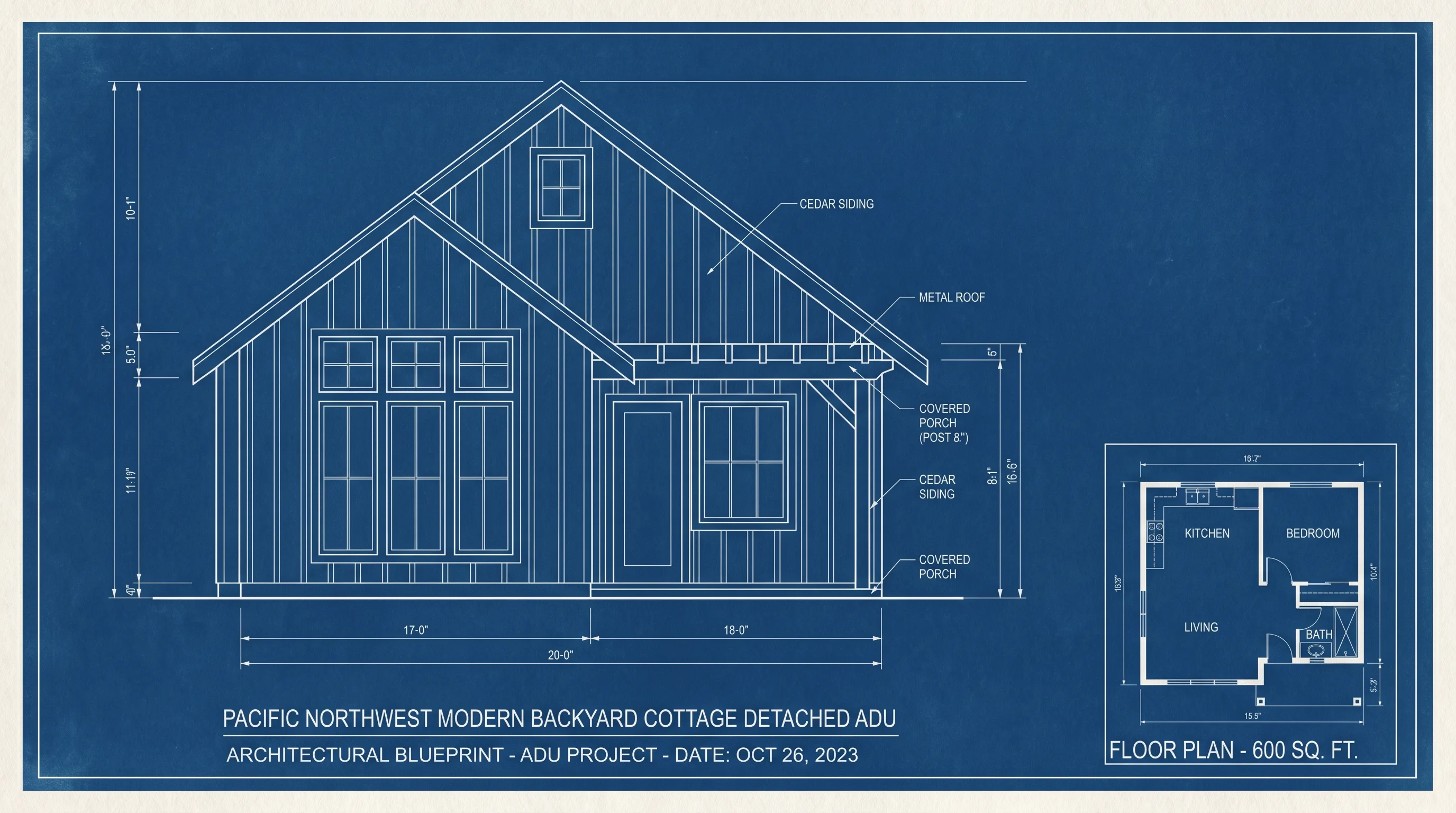
The single line that separates the two is the kitchen. Add a full kitchen and sleeping space and you've built a dwelling — an ADU — with the heavier permit and utility path that comes with it. Leave it out and you've built an accessory structure, which is simpler, faster, and cheaper. That's why a non-dwelling office is how most Seattle remote workers land under about $150K.
Which to choose
Build the officeif all you need is a quiet, professional workspace and you don't plan to rent or house family in it. It's the cheapest legal path, and a garage conversioncan be an even faster way to get there if you already have the structure — you're reusing the bones instead of pouring a new foundation.
Build the full DADUif you want optionality: a workspace today that can become a rental ($1,600–$3,500/month) or a family unit when you go back to the office. You pay more for the kitchen, the second utility connections, and the larger footprint — but you're buying flexibility and income potential, not just a desk.
Keep reading
Is an ADU worth it in Seattle? → covers the rental and resale math if you lean toward the full DADU. Compare the garage conversion → and DADU → options, then check your lot → for a planning cost range and what your city allows.
A full ADU/DADU is defined by being an independent living unit — which generally means kitchen, bath, and sleeping space. If you skip the kitchen and don't make it a dwelling, you're building an accessory structure (an office or studio), which is a different and usually simpler permit path. The kitchen is one of the lines that separates 'office' from 'ADU.'